








Among dietary patterns studied for long-term health, whole-food, plant-forward approaches—especially the Mediterranean diet—stand out for consistent associations with lower rates of heart disease, certain cancers, type 2 diabetes, and cognitive decline, along with better overall metabolic health. These patterns prioritize vegetables, fruits, legumes, whole grains, nuts, seeds, and healthy fats such as olive oil, while providing adequate protein that becomes increasingly important with age. They also emphasize limiting ultra-processed foods, refined carbohydrates, and excess added sugars that drive large glucose spikes and chronic inflammation.
What Defines This Pattern
A Mediterranean-style or plant-forward whole-food diet is not a rigid menu but a flexible framework:
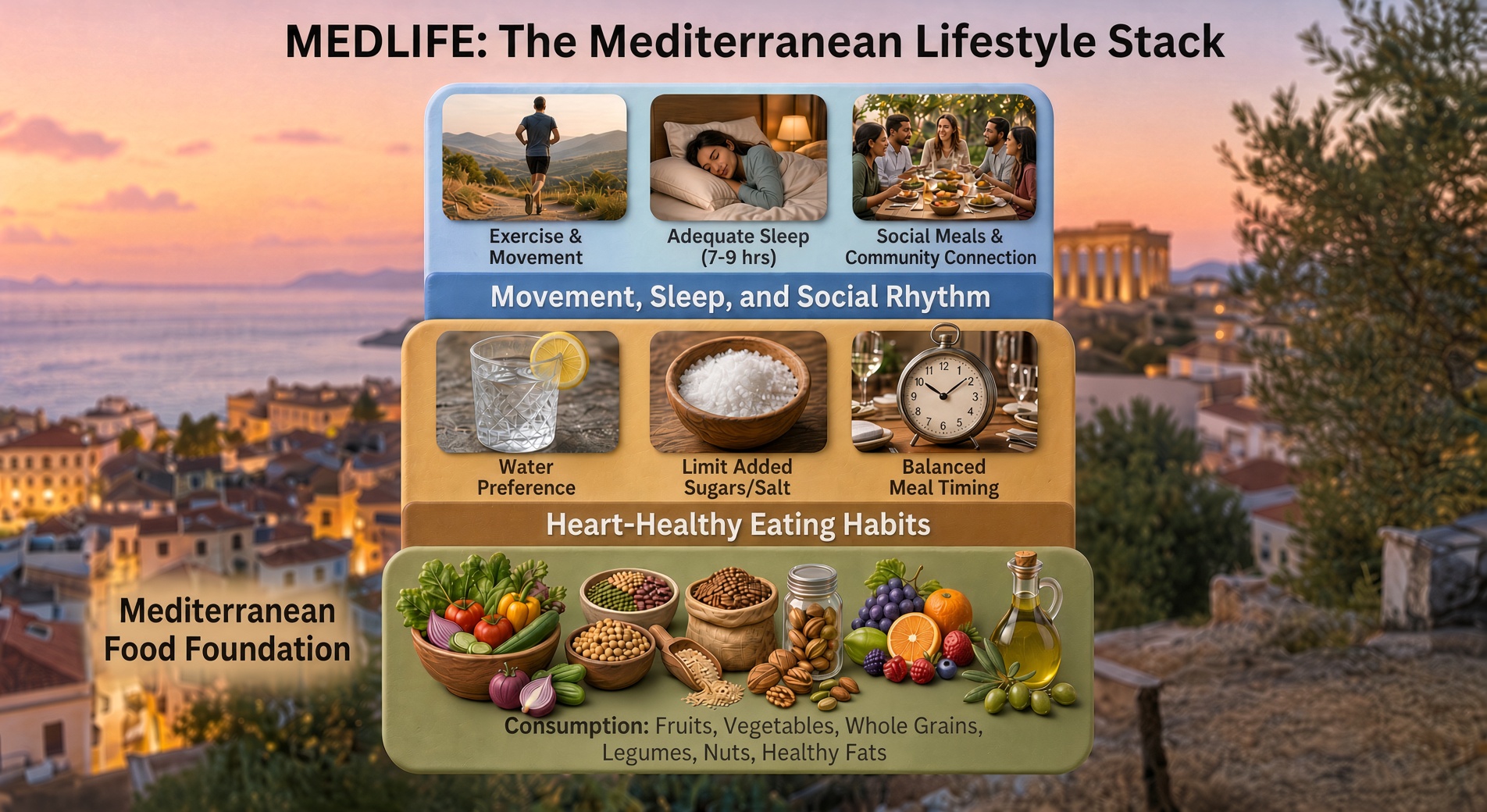
- Abundant non-starchy and colorful vegetables and fruits for fiber, polyphenols, vitamins, and minerals.
- Legumes (beans, lentils, chickpeas) as regular protein and fiber sources.
- Whole grains (oats, barley, quinoa, brown rice, whole-wheat products) instead of refined grains.
- Nuts and seeds for healthy fats, protein, and micronutrients.
- Healthy fats centered on extra-virgin olive oil, with moderate amounts of fatty fish (rich in omega-3s) and limited red and processed meats.
- Adequate protein overall—often targeting roughly 1.0–1.2 g per kilogram of body weight for healthy older adults, and higher (around 1.2–1.5 g/kg) for those at risk of or managing sarcopenia—distributed across meals to support muscle protein synthesis. Quality sources include fish, poultry, eggs, dairy or fermented options, legumes, tofu, and nuts.
- Minimal ultra-processed foods, sugary drinks, refined starches, and excess added sugars.
This approach naturally moderates glycemic load. Pairing carbohydrates with fiber, protein, and fat slows digestion and reduces sharp blood-glucose spikes that promote insulin resistance, oxidative stress, and inflammation over time.
Evidence for Health and Longevity Outcomes
Large observational cohorts and intervention trials support broad benefits. The landmark PREDIMED trial randomized high-cardiovascular-risk adults to a Mediterranean diet supplemented with extra-virgin olive oil or mixed nuts versus a low-fat control. After about five years, the Mediterranean groups showed roughly 28–31% lower risk of major cardiovascular events. Meta-analyses of prospective studies have linked higher adherence to lower all-cause mortality, reduced coronary heart disease, stroke, and type 2 diabetes incidence (often in the range of 15–30% relative reductions depending on the outcome and population).
Cancer associations are also favorable in many reviews, with lower overall incidence or mortality for several types including colorectal, and suggestive benefits for others. Cognitive outcomes show reduced risk of mild cognitive impairment and Alzheimer’s disease with higher adherence, alongside better preservation of memory and executive function in some trials. Metabolic improvements include better insulin sensitivity, lower blood pressure, improved lipid profiles, and reduced visceral fat in many studies.
These effects appear across diverse populations, not only traditional Mediterranean regions, suggesting the underlying food principles—high plant diversity, fiber, monounsaturated and polyunsaturated fats, and low refined-sugar load—drive much of the benefit. Recent guideline efforts, including 2025 national recommendations synthesizing evidence across multiple health domains, further affirm the pattern’s preventive and therapeutic value for cardiovascular disease, diabetes, cognitive decline, and overall mortality.
Protein, Muscle, and Aging
Protein needs rise with age due to anabolic resistance: older adults require more protein per meal to stimulate muscle protein synthesis effectively. Expert groups such as ESPEN and others commonly recommend at least 1.0–1.2 g/kg/day for healthy older adults and higher intakes for those with sarcopenia or frailty, ideally spread across meals (roughly 25–40 g of high-quality protein per main meal, providing adequate leucine). Within a plant-forward pattern, this can be achieved through combinations of legumes, dairy or fortified plant alternatives, fish, eggs, poultry, and nuts, rather than relying solely on animal sources. Pairing higher protein with resistance exercise amplifies muscle and bone preservation.
Limiting Ultra-Processed Foods and Glucose Spikes
Diets high in ultra-processed foods (formulations with industrial ingredients, additives, and typically low fiber) are consistently associated in umbrella reviews and large cohorts with higher risks of cardiovascular disease, type 2 diabetes, obesity, depression, and all-cause mortality. Mechanisms likely include nutrient displacement, overconsumption, microbiome disruption, and exaggerated insulin and inflammatory responses. Even when calories and macronutrients are matched, some experimental data show greater insulin responses and altered substrate oxidation after ultra-processed meals. Reducing these foods while emphasizing intact, fiber-rich plants helps stabilize blood glucose, lower chronic inflammation, and support metabolic flexibility.
Practical Implementation
Focus on building plates around vegetables and legumes, using olive oil as the primary fat, choosing whole grains, including a protein source at each meal, and snacking on nuts or fruit. Swap refined products for minimally processed alternatives gradually. Variety matters: aim for diverse plants across the week for broader phytochemical and fiber benefits. Individual calorie needs, preferences, and medical conditions (such as kidney disease affecting protein targets) should guide personalization, ideally with clinical input when relevant.
The Bottom Line
Whole-food, plant-forward and Mediterranean-style patterns offer one of the best-supported nutritional strategies for reducing major age-related diseases and supporting metabolic health. By emphasizing nutrient-dense plants, healthy fats, adequate age-adjusted protein, and minimized ultra-processed and high-sugar items, they address multiple drivers of chronic disease simultaneously. Combined with physical activity and other lifestyle foundations, this dietary approach provides a practical, sustainable foundation for longer healthspan.