
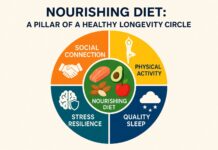










Chronic stress and poor mental health accelerate biological aging through inflammation, metabolic disruption, and behavioral pathways. A sense of purpose, positive relationships, mindfulness or other stress-reduction practices, and effective treatment of depression or anxiety are associated with better outcomes on measures of biological age and long-term health.
How chronic stress speeds biological aging
Chronic psychological stress is linked to multiple hallmarks of aging, including epigenetic alterations, chronic inflammation, cellular senescence, mitochondrial dysfunction, telomere attrition, and DNA damage. Second- and third-generation epigenetic clocks (such as GrimAge variants and DunedinPACE) consistently show that lifetime or ongoing stress exposure is associated with accelerated epigenetic age and a faster pace of aging.
Mechanisms include glucocorticoid signaling that alters DNA methylation at sites used by aging clocks, elevated inflammatory cytokines (IL-6, TNF-α, CRP), and metabolic shifts that favor insulin resistance and visceral fat accumulation. Stress also promotes behavioral patterns—poor sleep, reduced physical activity, higher alcohol use, smoking, and poorer diet—that themselves accelerate epigenetic aging. Studies of cumulative lifetime stress, financial strain, discrimination, and adverse childhood experiences have found associations with higher GrimAge and faster DunedinPACE scores, independent of chronological age.
Importantly, biological age is not fixed. Severe but temporary stressors (surgery, pregnancy, acute illness) can transiently elevate epigenetic age markers, with recovery often restoring them toward baseline. This suggests that the biological cost of stress is, at least in part, reversible when the stressor is resolved.
Depression, anxiety, and the aging process
Depression shows consistent links to accelerated epigenetic aging, particularly on clocks trained for mortality and health outcomes (GrimAge, PhenoAge). Untreated major depression has been associated with higher epigenetic age and shifts in immune cell composition. Large analyses indicate that biologically older individuals face higher risk of incident depression and anxiety, and that depressive symptoms predict later epigenetic age acceleration. Anxiety associations are less consistent across clocks and cohorts. Treating depression or anxiety may therefore remove one driver of accelerated aging while improving quality of life, though large trials specifically measuring clock changes after successful treatment remain limited.
Protective factors that associate with slower aging
Purpose. In a national sample of more than 1,500 older adults, a stronger sense of purpose in life was linked to reduced epigenetic age acceleration on multiple second-generation clocks (PhenoAge, GrimAge, and related measures). The difference between high and low purpose equated to roughly two years of epigenetic age in some analyses. A substantial portion of the association was explained by healthier behaviors (less smoking, more activity, better weight management), indicating that purpose may operate partly by supporting better daily choices.
Positive relationships. Cumulative social advantage—warm parental relationships in childhood, ongoing emotional support from friends and family, community engagement, and religious or social participation—has been associated with slower epigenetic aging (GrimAge and DunedinPACE) and lower systemic inflammation. Conversely, social isolation, loneliness, and low relationship support correlate with faster pace of aging. Positive social experiences appear capable of partially offsetting the effects of negative ones.
Mindfulness and stress-reduction practices. Mindfulness-based interventions show moderate evidence for lowering inflammatory markers (IL-6, TNF-α, CRP) and improving related physiological stress pathways. Long-term meditation practitioners exhibit lower expression of certain age-related genes and lower hair cortisol compared with non-meditators. While short-term trials have not always produced large shifts on epigenetic clocks, systematic reviews support effects on stress physiology, immune function, and gene-expression patterns relevant to inflammaging. Practices that reliably reduce perceived stress and improve emotion regulation are plausible contributors to healthier aging trajectories, especially when sustained.
Practical implications
Managing chronic stress and supporting mental and emotional health is not a soft add-on to longevity efforts; it targets core biological pathways that also respond to diet, exercise, and metabolic interventions. Evidence-based approaches include:
- Evidence-based treatment for depression and anxiety (psychotherapy, medication when indicated).
- Regular mindfulness, meditation, or other stress-reduction practices that fit the individual.
- Cultivating purpose through meaningful activities, contribution, or goal pursuit.
- Investing in high-quality relationships and reducing isolation.
- Addressing the behavioral mediators—sleep, physical activity, substance use, and nutrition—that amplify or buffer the effects of stress.
These factors often interact. Purpose and strong relationships make stress-reduction practices easier to sustain, while better mental health improves adherence to other healthy behaviors. Because clocks such as DunedinPACE and GrimAge respond to lifestyle and pharmacological interventions, they offer a potential way to track whether stress-management and mental-health efforts are shifting underlying biology, though individual results vary and clocks are not diagnostic tools.
Chronic stress and poor mental health leave measurable marks on the aging process. Purpose, connection, effective stress reduction, and treatment of depression or anxiety are associated with more favorable biological aging profiles. Supporting mental and emotional health is therefore one of the most direct levers available for influencing the rate at which the body ages.